
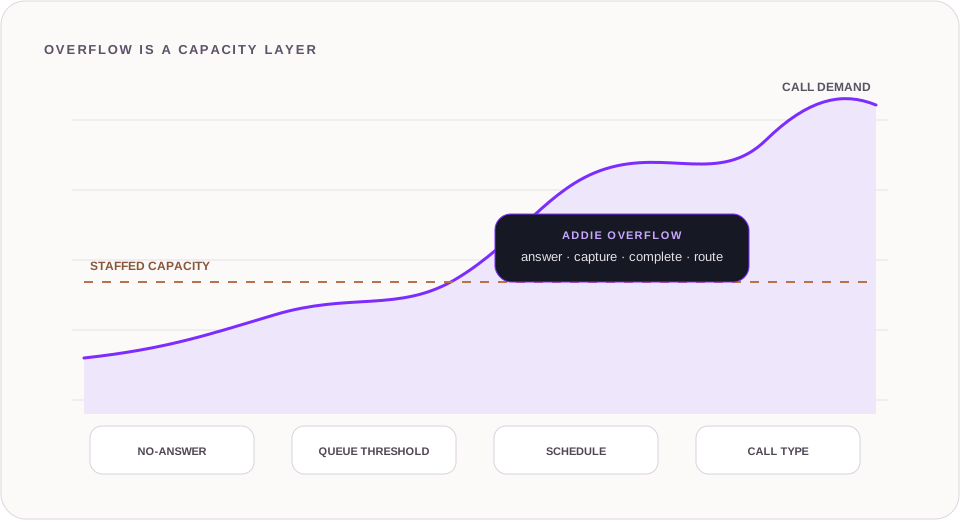
Overflow is a capacity problem before it is an AI problem
Calls are missed for predictable reasons: the front desk is already helping someone, the team is in the field, demand spikes around a promotion or season, the business is closed, or the right person simply cannot answer at that moment.
A useful overflow design starts by identifying those conditions. The trigger might be a no-answer path, a queue threshold, a schedule, a specific call type, or a combination of rules. The AI layer should enter because the operating condition calls for it—not because every call has to be automated.
Decide what a successful overflow call should accomplish
Answering alone may be enough for some calls. In other cases, the business gets more value when the overflow path completes a useful next step before the conversation ends.
- Answer common operational questions from an approved knowledge source.
- Capture structured intake or the minimum context needed for a callback.
- Book or change an appointment when calendar access, rules, and availability support it.
- Create a service, order, or follow-up request in an approved connected workflow.
- Transfer immediately when the caller asks for a person and the configured destination is available.
After-hours handling needs explicit urgency rules
After-hours calls should not all be treated the same. A routine scheduling request, a tenant reporting an emergency, a dealership customer asking for service status, and a restaurant caller changing a reservation can require very different behavior.
The deployment should define which situations can wait, which should create a callback, which can complete a connected action, and which should route to an on-call or emergency path. The AI should not improvise urgency policy on its own.
Keep answering availability separate from action availability
An AI receptionist can continue answering outside staffed hours, but completing a connected action can still depend on the external system, permissions, workflow configuration, or destination being available at that time.
This distinction matters in deployment design and in customer expectations. If an integration is unavailable, the fallback should be defined in advance—for example, capture the request, explain the next step, and hand the context to the team instead of pretending the action completed.
The handoff should carry the conversation forward
A caller should not have to restart from zero just because the call crosses from AI to a person. The useful output of an overflow interaction is often the structured context: who called, why, what was already confirmed, what was attempted, and what the human needs to do next.
That context can be passed in the transfer flow or written into an approved system so the team can pick up the work without recreating the intake.
Implementation checklist
Overflow launch checklist
- Document the exact no-answer, queue, schedule, or call-type triggers.
- List the call types Addie can handle and the ones that must stay human.
- Define urgent, emergency, and on-call routing separately from routine overflow.
- Test every connected action plus the fallback when that system is unavailable.
- Confirm the human-transfer destinations and what happens when no one answers.
- Decide what summary or structured context staff should receive after the call.