
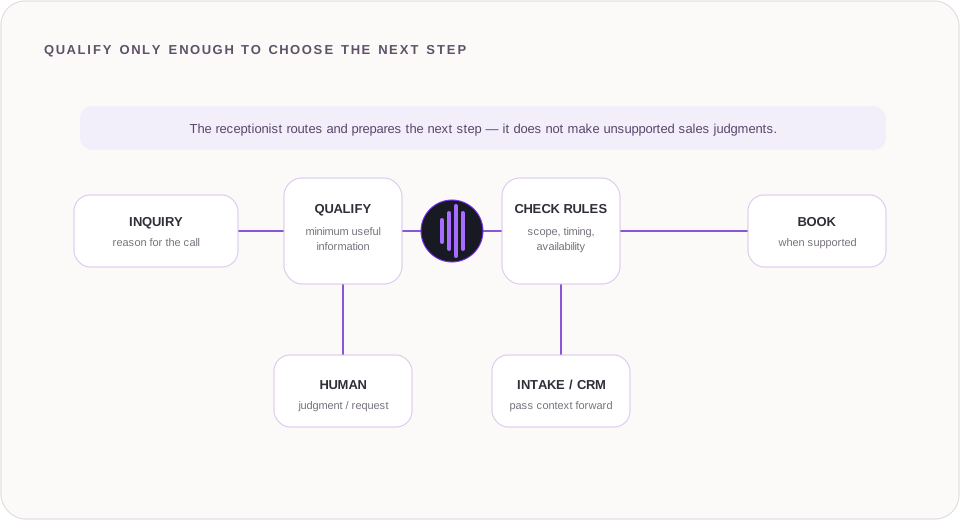
Define what 'qualified' means operationally
Qualification should be expressed as business rules the receptionist can follow consistently. For a service business, that may mean service type, service area, timing, and whether the request fits the work the business performs. For a professional-services intake, it may mean the type of matter or project, the requested service, and the appropriate team or calendar.
The agent should not invent a scoring system or make professional judgments that belong to qualified staff. Its job is to collect and route the information the business has approved.
Ask only for information that changes the next step
Long scripted interrogations create friction. The best intake usually focuses on the smallest set of fields that determine routing, eligibility, scheduling, or preparation for the human follow-up.
- What the caller needs or is trying to accomplish.
- Whether the request fits the business's service area or operating scope.
- Relevant timing or urgency when it changes routing.
- Contact information needed for the appointment or follow-up.
- Any approved detail the team needs before the next conversation.
Appointment booking is a rules-and-access problem
A conversational booking experience depends on more than understanding a preferred date. The deployment needs access to the correct calendar or scheduling system, the right appointment types, duration rules, buffers, staff or location eligibility, and the behavior for conflicts or unavailable slots.
When those controls are available and supported, the AI can guide the caller through a natural booking conversation. When they are not, the safer workflow may be to capture the preferred time window and create a follow-up request rather than imply that an appointment is confirmed.
Build the CRM or intake handoff around what the team uses
A qualified lead is more useful when the result lands where the team already works. That may mean a CRM record, an intake queue, a practice workflow, a dealership process, or another connected system supported by the deployment.
The record should make the next action obvious: appointment booked, callback requested, missing information, transfer completed, or follow-up required. The goal is operational continuity rather than a transcript nobody reads.
Keep a human path for the conversations that need one
Some callers will ask for a person immediately. Others will reach a point where the request depends on nuance, negotiation, professional judgment, or relationship context. Those are not failures of the workflow; they are conditions the workflow should recognize.
The configured path should transfer when a person is available or capture the minimum useful context for the right callback when they are not.
Implementation checklist
Design the workflow before automating it
- Write the exact business rules that determine fit, routing, and appointment type.
- Remove intake questions that do not change the next step.
- Confirm calendar permissions, availability rules, buffers, locations, and exception behavior.
- Define what the receptionist may say when no matching appointment is available.
- Choose the system of record for the lead and the fields the team actually uses.
- Set the human-handoff rules for requests that should not remain automated.